With advancements in laser marking technology, laser marking machines are increasingly applied across various industries, including apparel accessories, pharmaceutical packaging, architectural ceramics, beverage packaging, fabric cutting, rubber products, enclosure nameplates, craft gifts, electronic components, and leather goods. This article will delve into the structural principles of laser marking machines and the materials they can process.
I. Working Principle of Laser Marking Machines
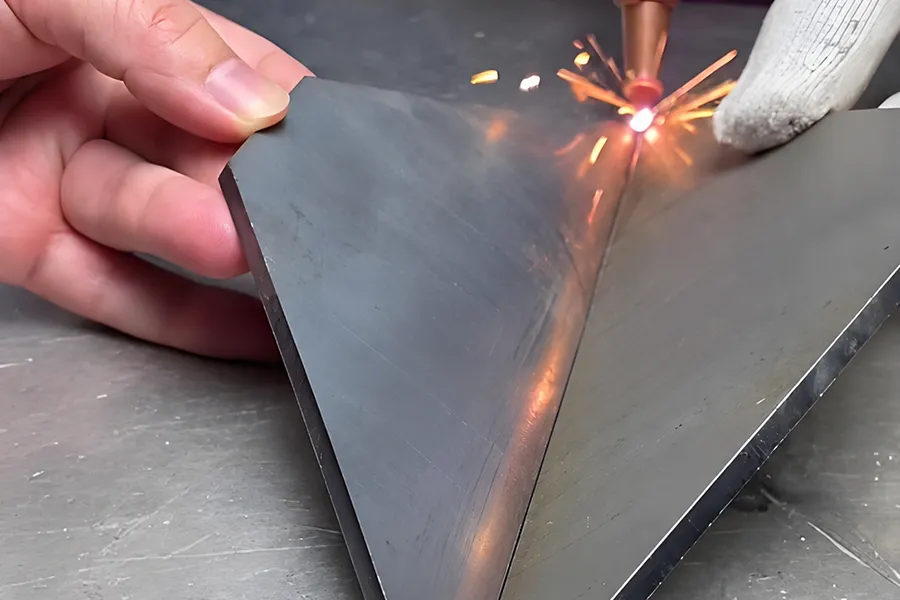
Laser marking machines utilize laser beams to create permanent markings on various material surfaces. The marking effect is primarily achieved through two methods: first, by using light energy to vaporize the surface material or induce chemical-physical changes, thereby exposing the underlying material to form “engraved” traces; second, by burning away portions of the material with light energy to reveal the desired patterns and text.
The two widely recognized working principles are as follows:
1. Thermal Processing
A laser beam with high energy density (focused energy flux) is directed at the material surface. Upon absorbing the laser energy, thermal excitation occurs in the irradiated area, causing the surface (or coating) temperature to rise. This triggers phase transitions, melting, ablation, vaporization, and other phenomena.
2. Cold Processing
High-energy (ultraviolet) photons break chemical bonds within the raw material (especially organic materials) or its surrounding medium, causing non-thermal structural damage. This type of cold processing is particularly significant in laser marking applications because it involves chemical bond breaking—a non-thermal cold stripping process rather than thermal ablation. Consequently, it avoids side effects like “thermal damage,” preventing heating or thermal deformation of the inner layers and surrounding areas of the processed surface. For instance, in the electronics manufacturing industry, excimer lasers can be used to deposit chemical films onto substrates and etch narrow trenches on semiconductor silicon wafers.
II. Structural Components of Laser Marking Machines
1. Laser Power Supply
The laser power supply for fiber laser marking machines provides power to the fiber laser. It operates on AC 220V input voltage and is installed within the machine’s control box.
2. Fiber Laser
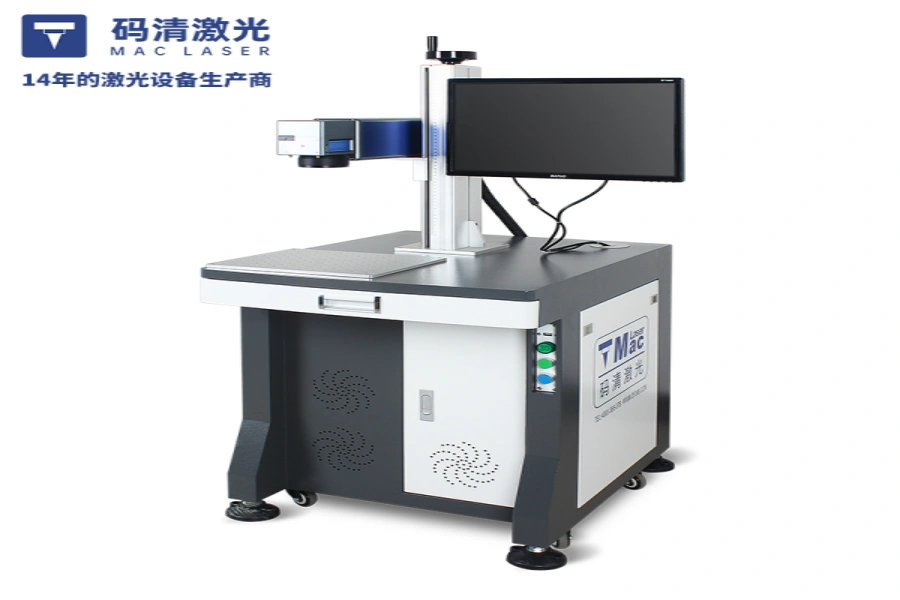
The fiber laser marking machine utilizes an imported pulsed fiber laser. It delivers an excellent laser mode output and is designed for long-term durability. It is installed within the laser marking machine body.
3. Galvo Scanner System
The galvo scanner system consists of an optical scanner and a servo control unit. The entire system is designed and manufactured using cutting-edge technology, new materials, advanced production processes, and innovative principles.
The optical scanner employs an AC servo motor operating in a moving magnet deflection mode. It offers advantages such as a large scanning angle, high peak torque, high load inertia, low electromechanical time constant, fast operating speed, and smooth, safe, and reliable performance. The precision bearing backlash elimination structure ensures ultra-low axial and radial runout errors. The “electronic torsion bar” replaces traditional elastic torsion bars, further extending service life and enhancing long-term operational stability. The zero-power maintenance principle at any position reduces functional energy loss and component heat generation, eliminating the need for temperature control devices. Cutting-edge high-stability precision position detection sensor technology delivers high linearity, high resolution, high repeatability, and low drift performance.
Optical scanners are categorized into X-axis and Y-axis scanning systems, with laser reflector mirrors fixed on each servo motor shaft. Each servo motor receives digital signals from the computer to control its scanning trajectory.
4. Focusing System
The focusing system concentrates parallel laser beams into a single point. Typically employing f-θ lenses, different f-θ lenses offer varying focal lengths, resulting in distinct laser marking effects and coverage areas. The fiber laser marking machine utilizes an imported high-performance focusing system with a standard lens focal length of f=160mm, providing an effective scanning range of Φ110mm. Users may select alternative lens models based on specific requirements.
Optional F-θ lenses include:
f=100mm, effective focusing range Φ65mm.
f=160mm, effective focusing range Φ110mm.
5. Computer Control System
The computer control system serves as the core for commanding and controlling all laser marking machines, while also acting as the medium for program installation. It coordinates the acoustic-optical modulation system and galvanometer scanning system to execute laser marking processing on product workpieces.
The electronic computer control system of a fiber laser marking machine primarily includes the main chassis, computer motherboard, CPU, computer hard drive, computer memory modules, D/A card, optical drive, display screen, computer keyboard, and computer mouse.
III. Materials Compatible with Laser Marking Machines
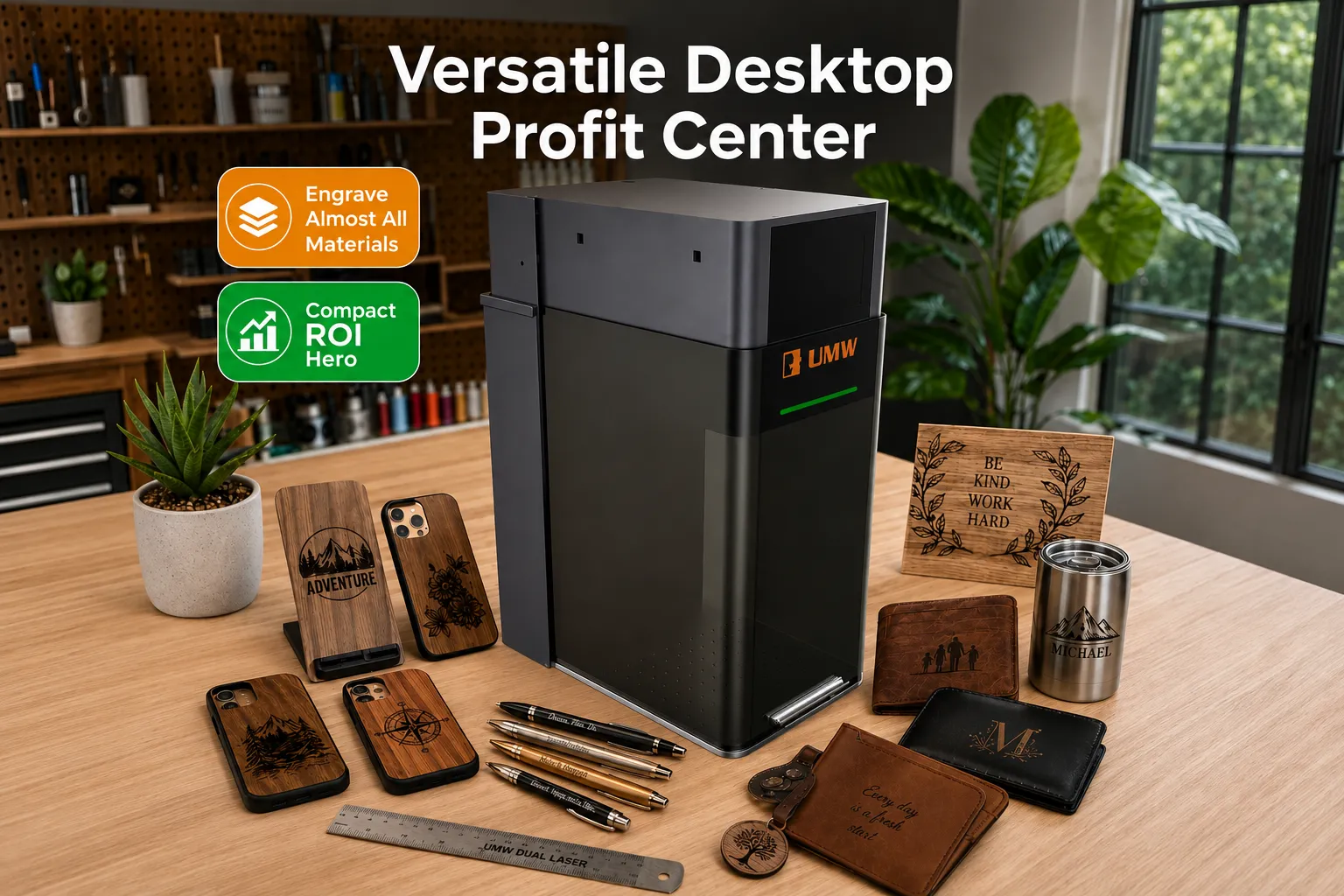
1. Laser marking machines can engrave both metallic and various non-metallic materials. They are particularly suited for the production and processing of products requiring intricate details and high precision.
2. Applications include electronic components, integrated circuits (ICs), electrical appliances, mobile phone accessories, metal products, tool accessories, precision instruments, eyewear and watches, jewelry, automotive parts, plastic control buttons, building materials, PVC plastic pipes, and medical equipment.
3. Compatible materials include: – Common metals and alloys (iron, copper, aluminum, magnesium, zinc, etc.) – Precious metals and alloys (gold, silver, titanium) – Metal oxides (all types) – Special surface treatments (phosphating, aluminum anodizing, electroplating) – ABS plastic (appliance housings, household items) – Ink (translucent buttons, printed products) – Epoxy resin (electronic component encapsulation, insulation layers) ABS plastic (appliance housings, consumer goods), ink (illuminated control buttons, printed materials), epoxy resin (electronic component encapsulation, insulation layers).
4. Different types of laser marking machines should be used for different raw materials. For non-metallic materials like wood, fabric, acrylic, paper, plastic, leather, and PVC, CO₂ laser marking machines are generally selected. For metallic materials such as aluminum, copper, gold, silver, aluminum oxide, stainless steel, galvanized steel, and zinc alloys, fiber laser marking machines are typically required. Additionally, UV laser marking machines can mark materials like PVC, rubber, plastics, aluminum, copper, and precious metals.