1. Introduction
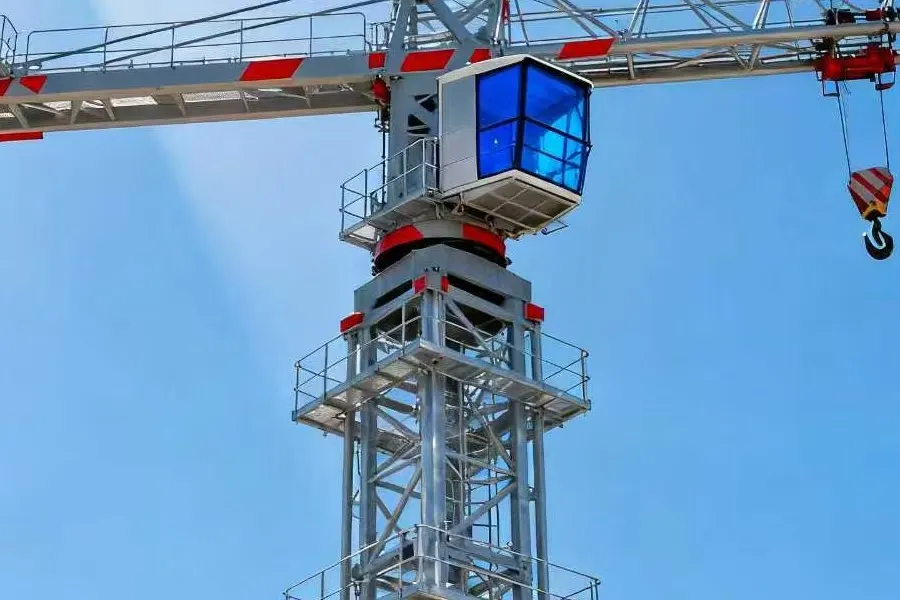
Lifting machinery refers to mechanical equipment that operates intermittently and repetitively to lift, lower, or move heavy objects using lifting hooks or other lifting attachments. In the 2014 Special Equipment Catalog revised by the General Administration of Quality Supervision, Inspection and Quarantine and promulgated with the approval of the State Council, lifting machinery is defined as electromechanical equipment used for vertical lifting or vertical lifting combined with horizontal movement. Its scope is specified as follows: cranes with a rated lifting capacity of 3 t or greater (or tower cranes with a rated lifting moment of 40 t·m or greater, or loading/unloading bridges with a productivity of 300 t/h or greater), and a lifting height of 2 m or greater; mechanical parking equipment with two or more levels.
With the rapid expansion of national infrastructure development, China’s crane market has experienced accelerated growth. The industry is shifting toward larger key products, lighter general-purpose equipment, and greater component standardization.
Given the favorable momentum in China’s lifting machinery industry, emphasis should be placed on enhancing design and manufacturing technologies while researching and proposing strategies for sustainable development. Although domestically produced lifting machinery now ranks among the industry’s leaders in the Chinese market, awareness regarding independent innovation and brand establishment remains limited. The key to driving high-quality development in China’s lifting machinery sector lies in technological innovation, integrating existing advanced manufacturing techniques, and progressively advancing toward intelligent solutions.
2. Development History of Lifting Machinery
Lifting machinery has a long history of application in China, with ancient irrigation water-lifting devices serving as prototypes for boom-type lifting equipment. In modern society, driven by continuous technological advancement, lifting machinery has evolved over more than 200 years. Major manufacturing countries include developed nations such as Germany, Finland, and Japan, with primary sales markets concentrated in North America, Europe, and Asia.
China’s crane industry has also undergone continuous innovation. In recent years, driven by rising social productivity and rapid development in transportation, metallurgy, construction, and other sectors, demand for crane equipment has shown a growing trend. Specialized operating environments have imposed higher performance requirements on crane machinery.
3. Current Status of China’s Crane Industry
China’s crane industry has developed through continuous accumulation and vigorous competition. Since the introduction of the first generation of truck cranes in the 1960s, it has progressed over more than 50 years, achieving significant advancements in equipment R&D and manufacturing technology. Currently, China’s crane industry is entering the international competitive arena at an unprecedented pace. The steadily increasing demand for lifting machinery has driven the growth of China’s manufacturing capabilities while simultaneously elevating the technological sophistication of its products. The primary trends shaping the future of China’s lifting machinery industry are tonnage polarization and product intelligence—specifically, the development toward both large-scale and miniaturized equipment. From the perspective of user product characteristics, recent demand shifts in the lifting machinery sector are concentrated in: modularization, standardization, combination, and practicality of product series; lightweighting, miniaturization, and diversification of general-purpose products; automation, intelligence, and integration of product performance; computerization, precision, and rapidity in product design; novelty, aesthetics, and comprehensive functionality in product construction; large-scale, high-speed, durable, and specialized key products; and swift, professional, and user-friendly after-sales service.
Faced with diverse user demands and the impact of intense market competition, crane equipment manufacturers are accelerating transformation and upgrading, intensifying the integration of informatization and industrialization, and boosting innovation efforts to ensure their products keep pace with the times.
The “Industry 4.0” concept introduced by Germany represents the fourth industrial revolution, or revolutionary production methods, centered on smart manufacturing. This strategy aims to transform manufacturing toward intelligence by fully leveraging information and communication technologies (ICT) and cyber-physical systems—the integration of information technology with physical systems.
Lifting equipment is an indispensable component in enterprise production processes. As manufacturing undergoes intelligent transformation, the lifting machinery industry will face unprecedented challenges and opportunities. In this complex market environment, only by keeping pace with the times can China’s lifting machinery industry achieve high-quality development.
4. Constraints on the Development of Domestic Lifting Machinery
Although China has become the world’s largest manufacturer of lifting machinery and the top exporter of small-tonnage lifting equipment, domestic enterprises still lack sufficient technological competitiveness in the market for ultra-large-tonnage and intelligent lifting machinery. The development of new materials and processes remains a significant obstacle to industry advancement. Breakthroughs in ultra-heavy-duty technology are largely expected from large domestic enterprises with robust technical capabilities, while medium and small enterprises may lack the necessary technological accumulation and financial backing.
Judging solely by the growth rate of output value in the lifting machinery sector, China has achieved increases in output value, export volume, and product quality. However, overall technical strength still lags behind developed countries, and two primary constraints persist: policy and market factors.
4.1 Tightening Industry Policies
In recent years, the nation has vigorously promoted energy conservation and environmental protection, resulting in relatively stringent policies for construction machinery. Under the constraints of existing environmental and energy-saving laws, coupled with stricter regional environmental policies, requirements for design and manufacturing technologies in key areas of crane machinery have increased. This has significantly raised production costs, intensifying market competition.
4.2 Intensifying Market Competition
Currently, China’s manufacturing sector faces intense global competition. As a vital component of this industry, the lifting machinery sector is profoundly impacted by internationalization.
For an extended period, domestic crane products dominated a substantial share of the Chinese market. However, the continuous entry of international brands has fostered an intensely competitive environment between global and domestic players. Domestic cranes still exhibit design immaturity, particularly in the development of new products, materials, and technologies, where foreign competitors often seize first-mover advantages.
5. Conclusion
As a vital pillar of China’s manufacturing economy, the lifting machinery industry faces immense opportunities and challenges. Manufacturers must clearly recognize the current development landscape, understand their strengths and gaps, promptly introduce, absorb, and refine technologies, and intensify innovation efforts. They should focus on enhancing product performance through automation, intelligence, digitalization, and flexibility, becoming both users and beneficiaries of next-generation intelligent production technologies while also evolving into creators and suppliers of advanced industrial production techniques.
Furthermore, under a scientific and comprehensive standard system for crane design and manufacturing, promoting the standardization of crane equipment will elevate China’s manufacturing capabilities, open broader development prospects, and significantly contribute to advancing the national economy.