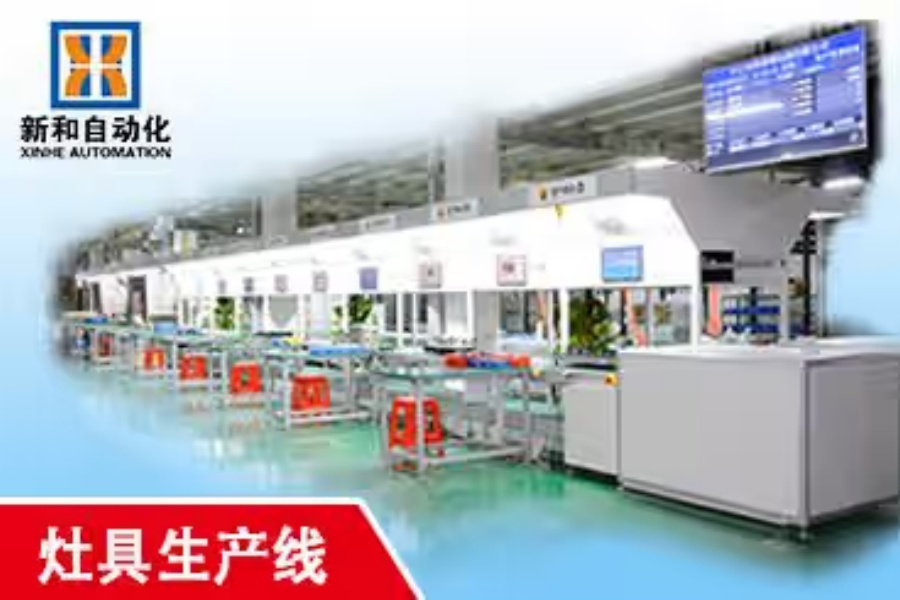
In industrial production, automated and intelligent automated production lines are becoming increasingly widespread. These automated production lines typically consist of ten major components. Below, Guangxinhe Automation shares these components with you.
1. The Controller – The Brain of the Automated Production Line
The controller serves as the brain of an automated production line. A controller (English name: controller) refers to the master control device that initiates motor start-up, speed regulation, braking, and reversal by altering the wiring of the main circuit or control circuit in a predetermined sequence and modifying the resistance values within the circuit.
Automated production line controllers consist of: a program counter, instruction register, instruction decoder, timing generator, and operation controller. It serves as the “decision-making body” that issues commands, coordinating and directing the entire computer system’s operations. Common controllers used in automated factory production lines include PLCs and industrial control computers. PLCs utilize a programmable memory to store internal programs, executing user-oriented instructions such as logical operations, sequential control, timing, counting, and arithmetic operations. They control various types of machinery or production processes through digital or analog input/output.
2. Robots – The Executors of the Automated Production Line
Robots serve as the executors in automated production lines—machines designed to perform tasks autonomously. They can accept human commands, execute pre-programmed sequences, or operate based on principles established by artificial intelligence technology. Their purpose is to assist or replace human labor in manufacturing, construction, or hazardous environments. Robots typically comprise an actuator, drive system, sensing devices, control system, and other components.
3. Servo Motor – The Power Source of the Automated Production Line
The servo motor serves as the power source for automated production lines. It functions as the generator controlling mechanical components within a servo system, acting as an auxiliary motor for indirect speed regulation. Servo motors enable highly precise control over speed and position accuracy, converting voltage signals into torque and rotational speed to drive controlled objects.
The rotor speed of a servo motor is controlled by input signals and responds rapidly. In automatic control systems, it functions as an actuator, featuring a small electromechanical time constant, high linearity, and low starting voltage. It converts received electrical signals into angular displacement or angular velocity output at the motor shaft.
They are categorized into DC and AC servo motors. A key characteristic is the absence of self-rotation when the signal voltage is zero, with speed decreasing uniformly as torque increases.
4. Sensors – The Tactile System of the Automated Production Line
Sensors serve as the tactile system of automated production lines.
A sensor (English name: transducer/sensor) is a detection device that perceives information from a measured quantity. It converts this perceived information into electrical signals or other required output formats according to specific principles, fulfilling requirements for information transmission, processing, storage, display, recording, and control. It constitutes the primary link in achieving automatic detection and control.
In modern industrial production, particularly automated processes, diverse sensors monitor and regulate various production parameters. This ensures equipment operates within normal or optimal conditions while achieving the highest product quality. Thus, it can be asserted that without a multitude of high-quality sensors, modern production would lack its foundational support.
5. Variable-frequency Drive – The Power Converter of the Automated Production Line
Variable-frequency drives (VFDs) serve as the power converters in automated production lines.
A variable-frequency drive (VFD) is a power control device that utilizes variable-frequency technology and microelectronics to regulate the operating frequency of an AC motor’s power supply.
A VFD primarily consists of rectifier (AC to DC conversion), filter, inverter (DC to AC conversion), braking unit, drive unit, detection unit, and microprocessor unit. The VFD adjusts output voltage and frequency by switching its internal IGBTs, delivering precisely tailored power to the motor’s operational requirements. This achieves energy savings and variable speed control. Additionally, VFDs incorporate multiple protective functions, including overcurrent, overvoltage, and overload protection.
6. Solenoid Valve – The Switch of the Automated Production Line
Solenoid valves serve as switches in automated production lines.
A solenoid valve is an electromagnetically controlled industrial device. It functions as an automated basic component for controlling fluid flow, classified as an actuator and applicable beyond hydraulic and pneumatic systems.
Used in industrial control systems, it adjusts the direction, flow rate, velocity, and other parameters of the medium. Solenoid valves can be paired with different circuits to achieve desired control, ensuring both precision and flexibility.
Numerous types of electromagnetic valves exist, each serving distinct roles within control systems. The most common include check valves, safety valves, directional control valves, and flow control valves.
7. Industrial Camera – The Eyes of the Automated Production Line
The industrial camera is the eyes of an automated production line.
As a critical component of machine vision systems, its fundamental function is converting light signals into organized electrical signals.
Typically mounted on production lines, they replace human eyes for measurement and judgment. By capturing digital images of targets and converting them into image signals, they transmit data to specialized image processing systems.
These systems perform various operations on the signals to extract target features, then control on-site equipment actions based on the analysis results.
8. Instrumentation – The Control System of the Automated Production Line
Instrumentation serves as the control system for automated production lines.
Instrumentation (English: instrumentation) refers to devices or equipment used to detect, measure, observe, and calculate various physical quantities, material compositions, and physical parameters. Vacuum leak detectors, pressure gauges, length measuring instruments, microscopes, and multipliers all fall under this category.
Automated factories require diverse instrumentation to measure parameters essential for control processes—such as pressure, liquid level, flow rate, and temperature—necessitating corresponding instruments.
9. Automation Software – The Heart of the Automated Production Line
Automation software is the heart of automated production lines.
Due to the trend toward integrated control and management in industrial control systems, industrial control systems are increasingly interconnected with traditional IT management systems and the internet. Internally, they also increasingly adopt generic software, hardware, and protocols. SCADA automation software is a common example.
SCADA (Supervisory Control and Data Acquisition) automation systems are what we refer to as data acquisition and monitoring systems. Primarily supported by computer technology, it automates scheduling and control for various production processes.
SCADA automation software enables unattended, long-term, precise monitoring of production. It extracts actionable data to provide robust evaluation references for supervisory management.
10. Control Cabinets – The Central Nervous System of the Automated Production Line
Control cabinets serve as the central nervous system of automated production lines.
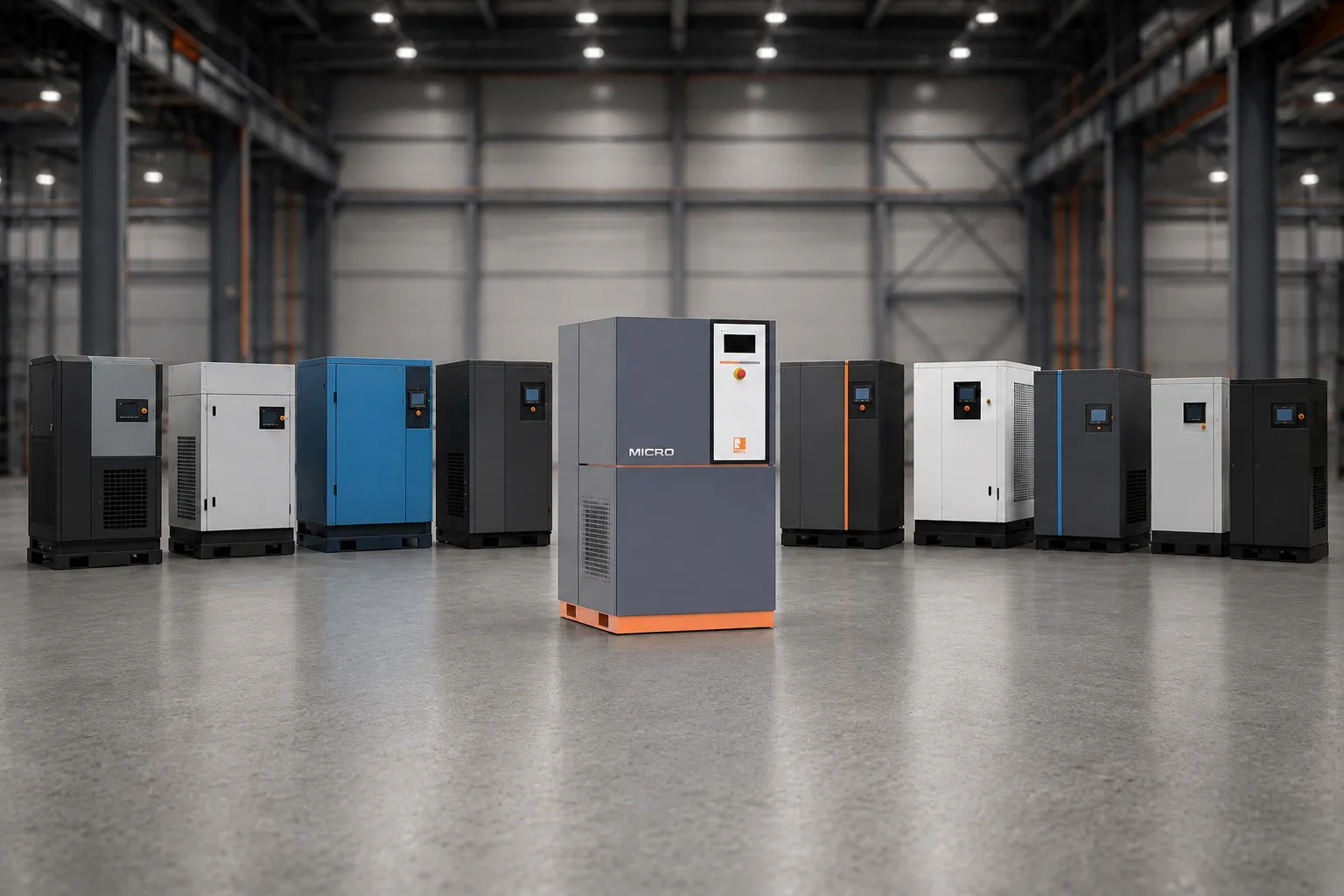
Control cabinets encompass numerous types, including electrical control cabinets, variable frequency control cabinets, low-voltage control cabinets, high-voltage control cabinets, pump control cabinets, power supply control cabinets, explosion-proof control cabinets, elevator control cabinets, PLC control cabinets, fire control cabinets, brick machine control cabinets, and more.
Automated factories utilize control cabinets for electrical systems, variable frequency drives, power supplies, pumps, and other functions. Different control cabinets are selected based on specific requirements to achieve diverse control capabilities.
In summary, these ten components work together to form efficient, intelligent automated production lines. Understanding each part’s function is crucial for designing, operating, and optimizing the entire automated production line. As technology advances, these components will continue evolving, driving industrial production toward a smarter, more integrated future of automated production.