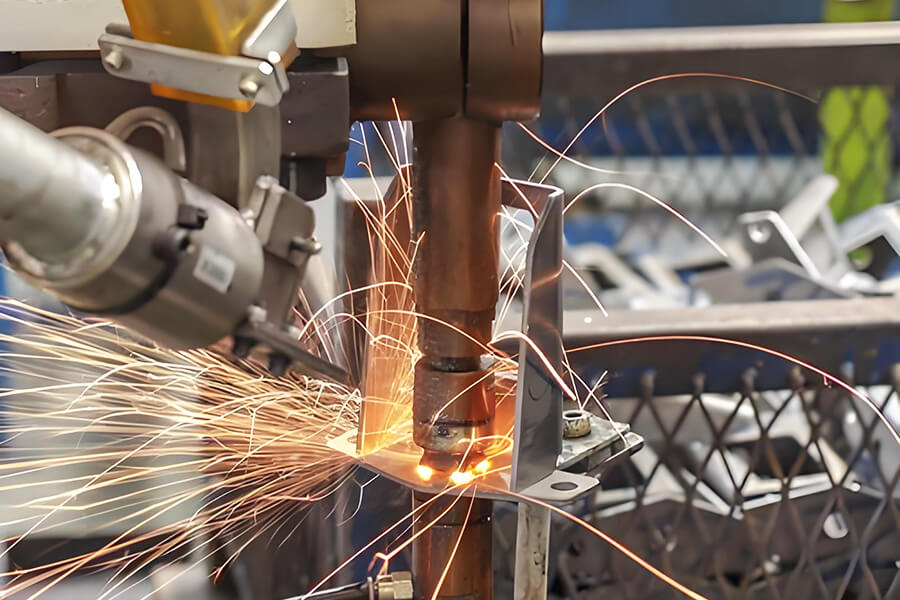
In the automotive manufacturing industry, welding is a crucial process for connecting the car body, chassis, and components. While traditional methods such as arc welding, spot welding, and brazing are widely used, they have limitations in terms of precision, efficiency, energy consumption, and material adaptability. With the increasing demands for industrial automation and lightweighting, laser welding solutions technology is gradually becoming an indispensable and efficient solution in automotive manufacturing.
Laser Welding Solutions in Automotive Component Manufacturing
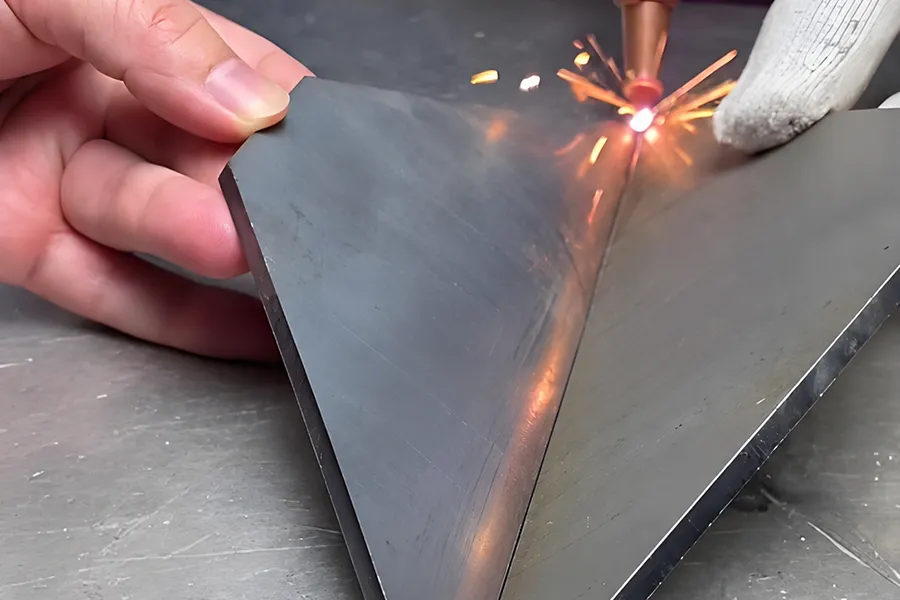
- Laser Self-Fusing Welding: Laser self-fusing base material. Process characteristics: High-speed welding, high precision, low heat input, small deformation, and large depth-to-width ratio.
- Laser Filler Wire Welding: Laser + Welding Wire. Process characteristics: Expands the laser welding range, improves weld formation quality, and controls the microstructure and properties of the weld area.
- Laser Remote Welding: Laser + Scanning Galvanometer. Process characteristics: Replaces traditional spot welding, high speed, high precision, high spatial accessibility, and can weld various weld shapes.
- Laser-Arc Hybrid Welding: Laser + Arc. Process characteristics: High adaptability, deep penetration, high strength, small deformation, and high weld quality.
- Laser brazing: Laser + brazing filler metal. Process characteristics: Wetting the base material (unmelted) to fill the joint, sealing the base material, and creating a beautiful finish.
Main application areas of laser welding in automobile manufacturing
1. Body-in-White Welding
Laser welding can quickly complete high-strength connections without affecting the material structure. It is commonly used for welding large-area sheet metal parts such as doors, roofs, floor panels, and side panels.
- Advantages: Smooth welds, small deformation, and can replace multi-point welding.
- Application example: Laser-welded blanks are widely used in lightweight body design.
2. Powertrain Components
Precision parts such as engine housings, gearboxes, differentials, and oil pumps are often welded using laser welding to ensure sealing and strength.
- Advantages: High-precision control and excellent airtightness.
- Common materials: Aluminum alloys, stainless steel, and high-strength steel.
3. Battery and New Energy Component Welding (EV Battery Modules)
In new energy vehicles, components such as battery modules, cooling plates, and copper-aluminum busbars require extremely high welding quality.
- Advantages: Small heat-affected zone, uniform weld seam, suitable for highly reflective materials such as copper and aluminum.
- Technology Trends: Using pulsed lasers or dual-wavelength lasers for welding to achieve more stable fusion results.
4. Automotive Electronic Components
Laser welding is widely used for sealing sensor housings, lidar modules, and control unit housings.
- Advantages: Non-contact operation, suitable for small sizes and complex structures.
Future Trends
With the development of new energy vehicles and intelligent manufacturing, laser welding solutions are evolving in the following directions:
- AI weld seam recognition and adaptive control: Automatically identifying welding defects and adjusting parameters in real time.
- Lightweight and new material welding: Optimized processes for aluminum, magnesium, and composite materials.
- Modular laser system design: Rapid deployment and multi-station collaborative production.
- Green and energy-saving manufacturing: Low-energy consumption, high-efficiency, and zero-pollution welding process.
Summary
The application of laser welding technology in automobile manufacturing demonstrates its strong vitality and broad application prospects. Automobile manufacturers such as Geely and Great Wall have already adopted laser welding technology in some new models. In the foreseeable future, driven by the new energy vehicle market, laser welding technology will undoubtedly be widely used in the automotive manufacturing field, contributing to the progress and development of lightweight manufacturing technology in the domestic automotive industry.