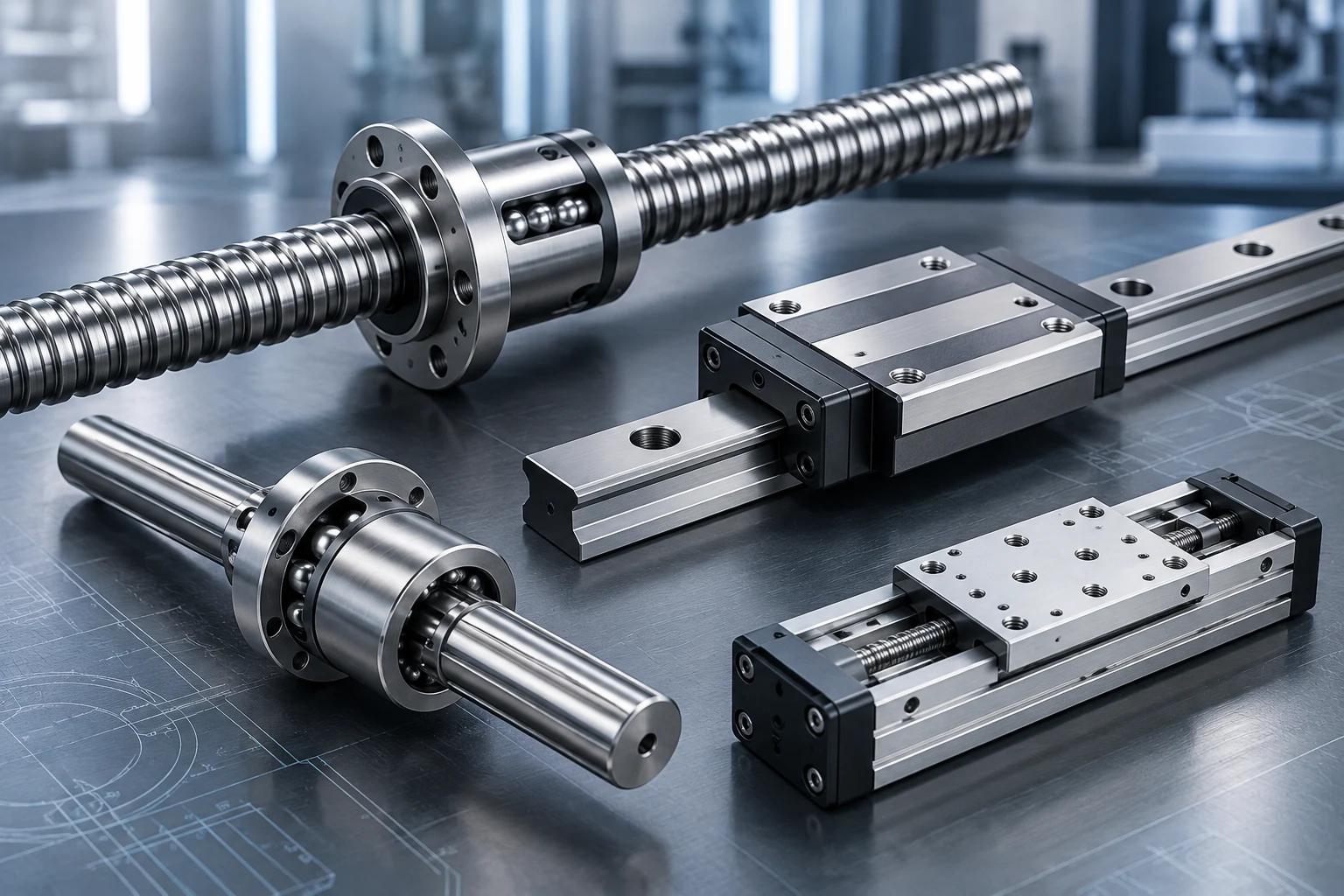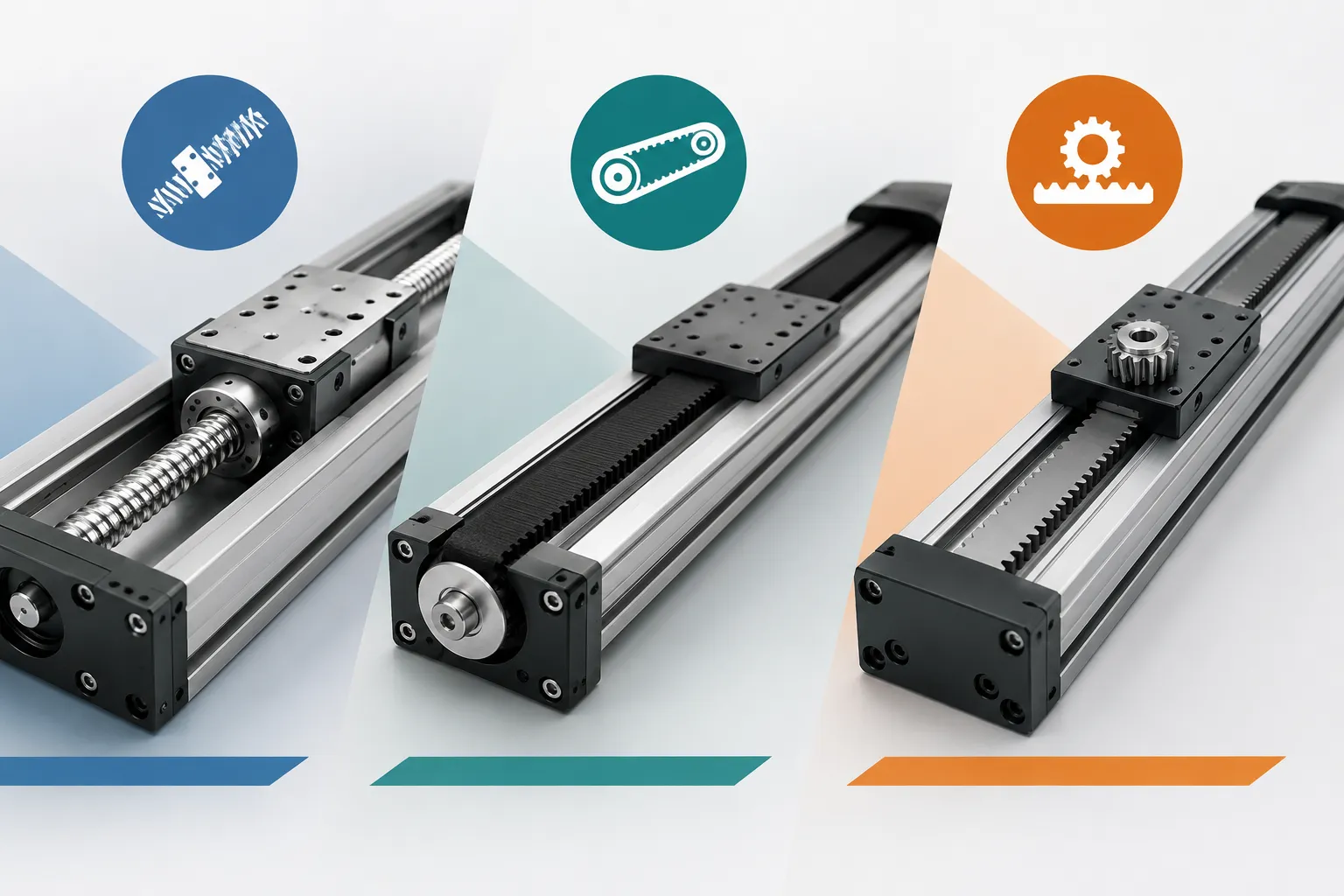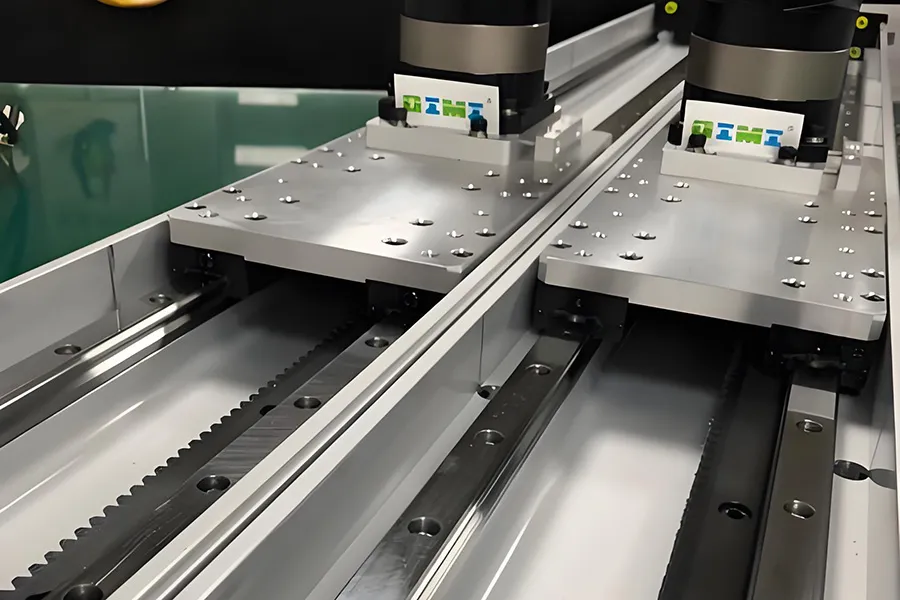
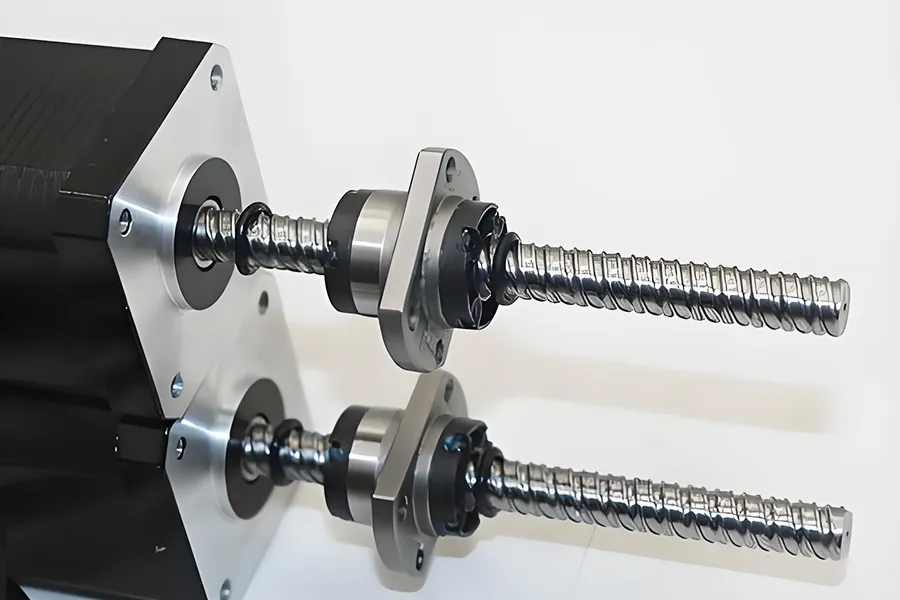
In modern industrial automation, machine tool processing, robotics, and precision instruments, ball screws have become a crucial core component for achieving high-precision linear motion. This article will delve into the driving methods of ball screws.
1. Electric Drive Methods
Using electric motors to drive ball screws enables efficient and automated operation of mechanical systems. Common electric drive methods currently available on the market include AC servo motors and stepper motors.
1.1 AC Servo Motor
AC servo motors achieve precise control of parameters such as speed and torque through servo control electronics. This is currently the best driving method, suitable for various complex mechanical systems. However, due to its complex installation and debugging, and high price, it is only suitable for applications requiring high driving performance.\
- Advantages: High precision, good smoothness, large output torque, wide range of applications.
- Disadvantages: Complex installation and debugging, high price, relatively noisy, requires high-quality power supply.
1.2 Stepper Motor
Stepper motors are a high-precision, low-cost driving method, commonly found in small mechanical systems. Their principle involves changing the pulse signal to rotate the motor, enabling high-frequency, high-precision position control. However, because stepper motors can only perform fixed-length movements, they are not suitable for mechanical systems requiring continuous variable speed.
- Advantages: Lower price, high precision, stable output torque.
- Disadvantages: Cannot perform continuous variable speed control, smaller output torque, prone to overheating during high-precision, high-speed driving.
2. Manual Operation Method
Manual operation is a simple ball screw driving method. By manually rotating the nut, the main shaft also rotates, thereby driving the conveying rod to achieve linear motion. Manual operation is a reliable option in harsh working environments or when operation is required during power outages.
3. Other Driving Methods
In addition to the electric motor drive and manual operation methods mentioned above, there are other ball screw driving methods, such as hydraulic drive and pneumatic drive. These driving methods are usually applied in environments with heavy loads and low speed requirements.
Overall, ball screws, as a transmission device, have a variety of driving methods, and the appropriate method should be selected according to actual needs. When choosing a drive method, various factors such as the working environment, load conditions, and speed requirements need to be considered to ensure the reliability and stability of the system.
Summary
Ball screw drive methods are diverse and should be selected according to actual needs. When choosing a drive method, various factors such as the working environment, load conditions, and speed requirements need to be considered to ensure the reliability and stability of the system.