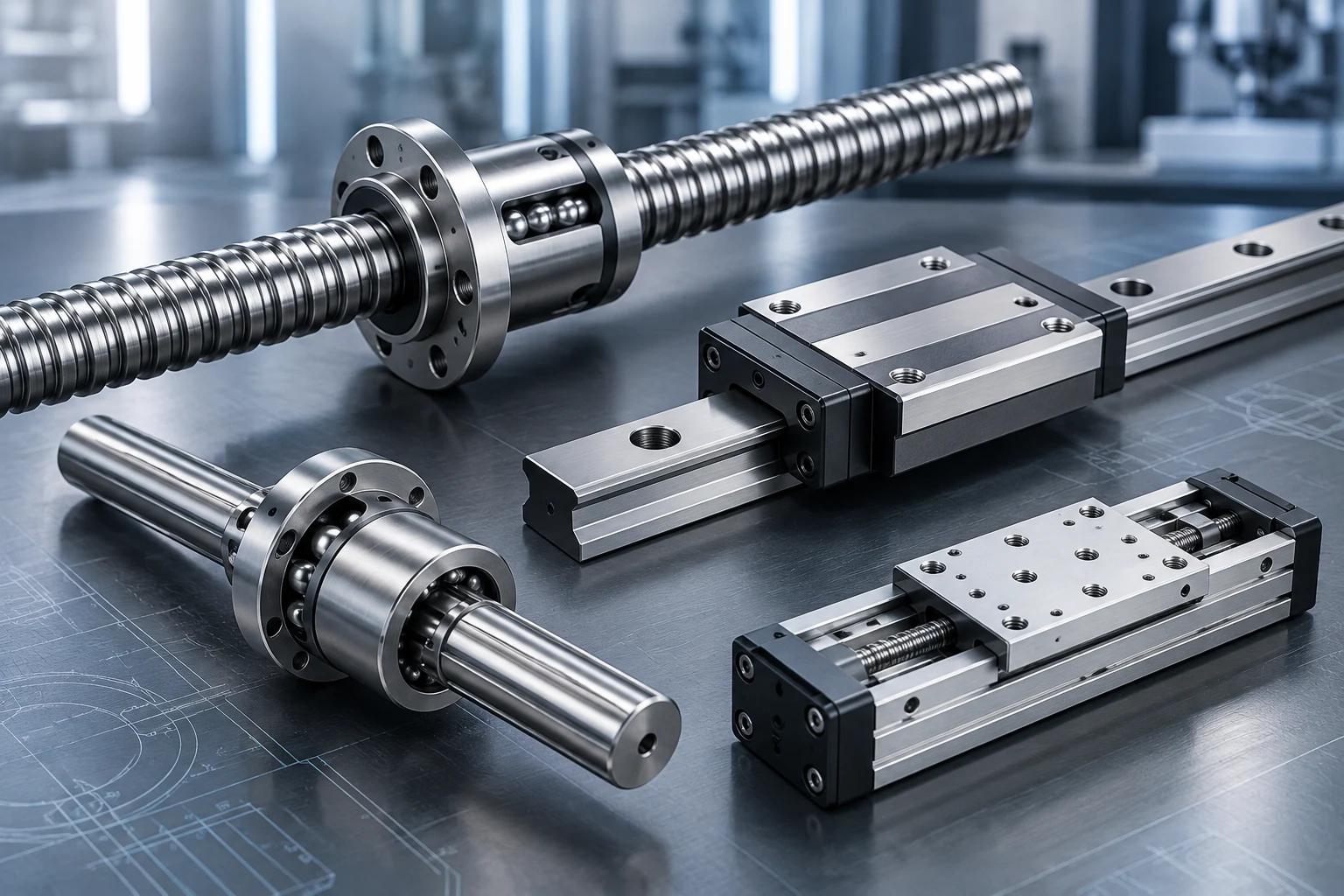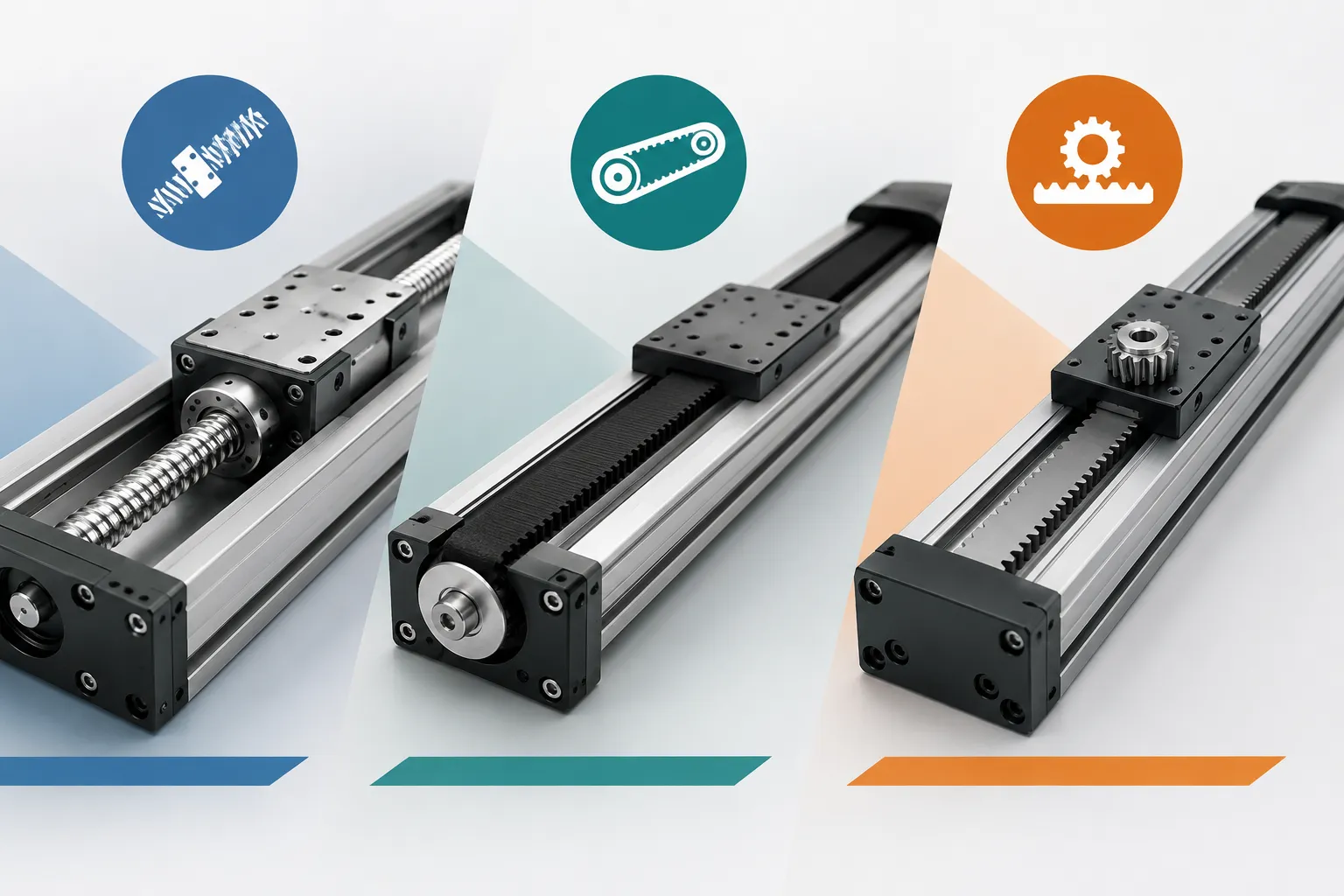

With the continuous development of the machinery industry, linear guides are becoming increasingly widespread in our lives. So how do we distinguish between good and bad performance of linear guides? Let’s take a look. We can understand the performance of linear guides by understanding some of their characteristics.
1. Guiding Accuracy
First, the guiding accuracy of a linear guide refers to the straightness of the moving part’s movement along the linear guide and the accuracy of the relative positions between related base surfaces. A smooth and easy-to-use linear guide should, while ensuring other requirements are met, have a simple structure that facilitates processing, measurement, assembly, and adjustment to reduce costs. Different equipment requires specific analysis of the linear guides used, and corresponding requirements must be proposed.
2. Rigidity
Does the linear guide have sufficient rigidity? The external force on the moving part is borne by the linear guide surface, so the linear guide should have sufficient rigidity. Therefore, we usually increase the width of the linear guide to reduce the specific pressure on the linear guide surface and use auxiliary linear guides to bear the external load.
3. Temperature Changes
How well do linear guides adapt to temperature changes? Under varying temperature conditions during operation, they should maintain normal operation and possess good wear resistance. Wear resistance refers to maintaining a certain level of accuracy even after prolonged use. Linear guides will wear during use, but the wear should be minimal, and the wear should be automatically compensated for or easily adjustable.
4. Brand Authenticity Identification Strategies
Linear guides from well-known brands (such as CSK) are frequently counterfeited. Identifying authenticity requires considering multiple factors:
4.1 Verify Source Documents
When purchasing, proactively request official documents from the supplier, such as the product’s certificate of origin and brand authorization letter. Legitimate channels usually provide complete traceability documentation.
4.2 Identify Anti-Counterfeiting Marks
Well-known brands often employ special anti-counterfeiting technologies on the guide body or slider, such as laser-etched micro-codes, invisible marks, or anti-counterfeiting labels. These markings are often not easily observed with the naked eye and require specialized tools (such as a counterfeit detector or magnifying glass) or official verification methods (such as website verification or app scanning).
4.3 Observe the Surface Treatment and Color
Genuine linear guides typically undergo rigorous processing (such as grinding, ultra-precision machining, specific surface treatments, or coatings) to achieve a uniform, delicate, and textured gloss, unlike the rough, dull, or overly glaring reflectivity often found in cheap imitations. Carefully comparing the color and texture of genuine samples is crucial.
4.4 Experience the Running Feel
Assuming correct installation preload, the slider of a genuine brand-name linear guide should run extremely smoothly and steadily, with uniform and minimal resistance. Counterfeits, due to differences in materials, heat treatment processes, manufacturing precision, and raceway grinding levels, often exhibit noticeable uneven frictional resistance, slight jamming, or a grainy feel during sliding.
4.5 Assess the Fit Precision
Genuine linear guides have extremely strict control over the fit clearance between the slider and track, ensuring high rigidity and running precision. Counterfeits typically fail to achieve the same level of precision; even if they feel acceptable initially, their precision retention and lifespan are far inferior to genuine products. The aforementioned “plane-fitting shaking method” is also an effective means of testing its fit precision.
Summary
Selecting the right linear guide can not only ensure the motion accuracy and stability of equipment, but also improve production efficiency and extend equipment life. For different high-precision application scenarios, a comprehensive evaluation and selection should be conducted, taking into account load, speed, environmental conditions, and lifespan requirements.