The performance of a linear guide rail is a decisive factor in high-precision equipment like CNC machines, semiconductor processing tools, and precision measuring instruments, directly impacting operational accuracy and stability. An inappropriate selection can lead to positioning errors, reduced service life, and higher maintenance costs. This article outlines the core steps and key considerations for selecting a linear guide rail, enabling informed decisions for your high-precision needs.
1 Core Principles for Selecting a Linear Guide Rail
To ensure a linear guide meets the demands of high-precision applications, adhere to three core principles: accuracy matching, load adaptation, and environmental compatibility. These principles prevent common pitfalls like over-specification or underperformance of the guide.
1.1 Calculate Actual Loads
Load-bearing capacity is a critical parameter affecting the service life and stability of a linear guide. Begin by calculating the actual loads, including vertical, lateral, and moment loads. Convert these into an equivalent load using standard formulas to select a model with a dynamic load rating that exceeds this value. Underestimation leads to premature wear, while overestimation unnecessarily increases cost.
1.2 Match Precision to Equipment Needs
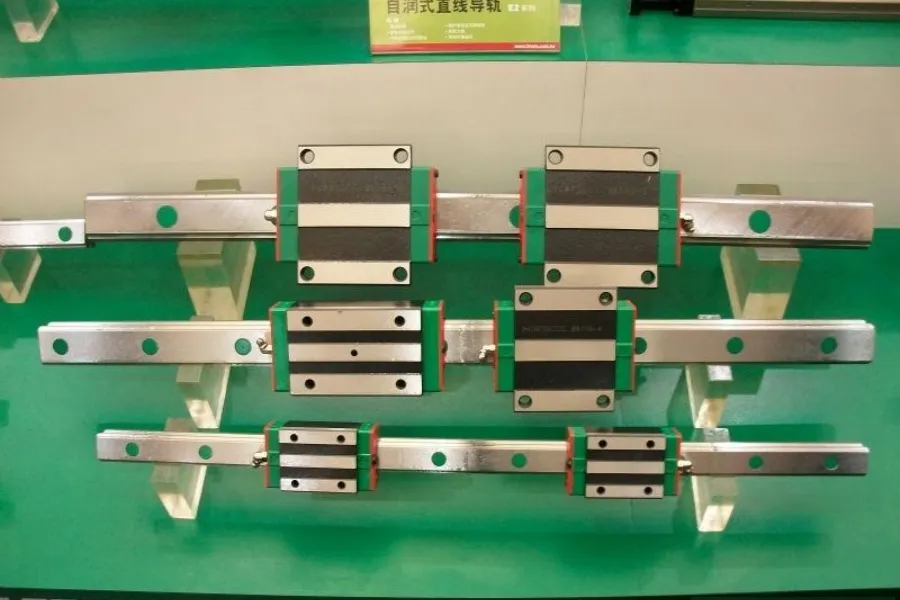
High-precision applications require different accuracy grades. Linear guides are classified into various precision levels (e.g., High, Precision, Ultra-Precision). While a high-precision grade may suffice for general machine tools, semiconductor manufacturing or precision metrology often demands ultra-high precision grades to guarantee micron-level positioning accuracy. Matching the precision grade to the actual requirement avoids performance waste and optimizes cost-efficiency.
1.3 Ensure Environmental Adaptability
The operating environment significantly impacts the performance and lifespan of a linear guide.
- Dusty Environments: Select a model with protective seals or covers to prevent contaminant ingress.
- Corrosive Environments: Choose options made from corrosion-resistant materials like stainless steel.
- Vacuum Environments: Select for a vacuum-compatible design and use lubricants with low exhaust characteristics.
1.4 Calculate the Service Life
The service life of a linear guide rail is determined by load, speed, and temperature. Use the manufacturer’s life calculation formula, adjusting for correction factors based on actual conditions. Ensure the calculated life meets the equipment’s expected lifespan to minimize downtime and replacement costs.
2 Key Steps for Linear Guide Rail Installation and Commissioning
Even a high-quality linear guide rail will fail to deliver precision if installed incorrectly. Follow these steps to maximize performance.
2.1 Prepare the Installation Base for the Linear Guide Rail
The mounting base must be flat and rigid to prevent deformation that compromises accuracy. Clean the base surface thoroughly and check flatness with a precision level. Use shims if necessary to achieve the required flatness tolerance.
2.2 Calibrate Parallelism During Linear Guide Rail Installation
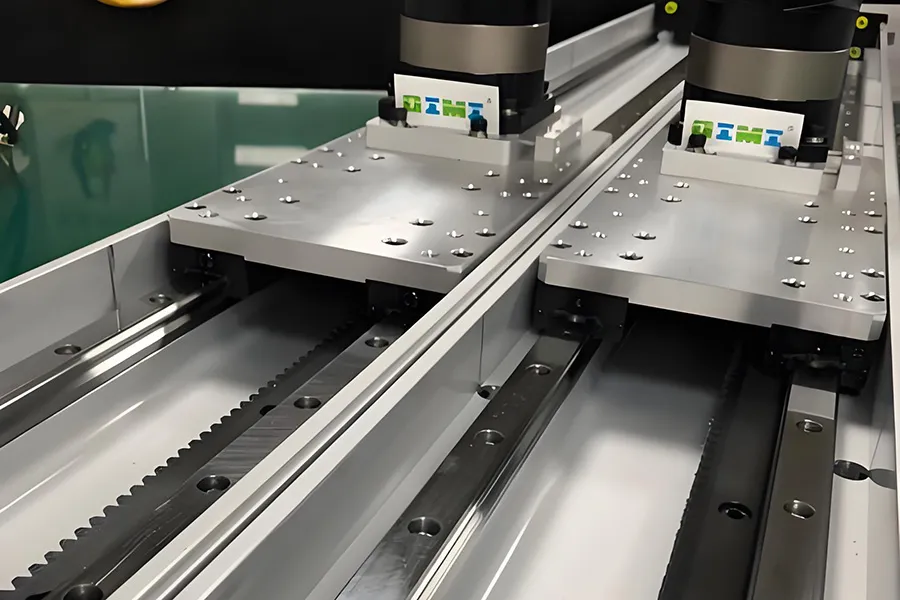
When installing multiple linear guide rails in parallel (e.g., in a gantry structure), ensure strict parallelism. Use a laser interferometer or dial indicator to measure and adjust, minimizing parallelism error to prevent uneven load distribution and premature wear.
2.3 Conduct Post-Installation Testing and Lubrication
After installation, perform a test run to check for smooth movement and verify positioning accuracy with precision measuring tools. Apply the recommended lubricant to reduce friction and extend the linear guide rail service life. Regularly inspect lubricant levels and adjust the lubrication frequency based on operating conditions to ensure long-term stable performance of the linear guide rail.
Conclusion
Selecting the right linear guide rail for high-precision applications requires a systematic approach integrating load calculation, precision matching, environmental adaptation, and proper installation. By following these principles, you can choose a linear guide rail that delivers stable, accurate, and long-lasting performance, thereby supporting the optimal operation of your equipment. The key lies in aligning the linear guide rail’s specifications with your specific application needs. By following this guide, you are equipped to make a selection that ensures reliability and maximizes the performance of your precision machinery.