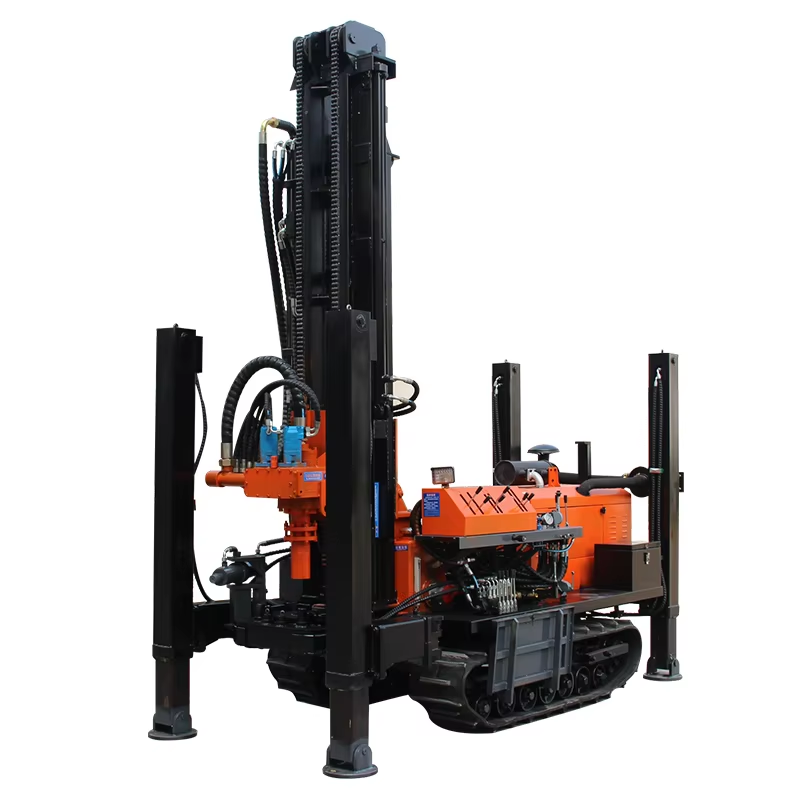
Buying a borehole drilling machine is a major investment for water well drilling, geotechnical work, agricultural irrigation, construction projects, and mineral exploration. However, many buyers focus only on machine size or purchase price and overlook the factors that truly affect drilling efficiency, operating cost, and long-term reliability.
Before choosing a machine, it is important to evaluate the project environment, drilling depth, borehole diameter, ground formation, mobility needs, and maintenance cost. For a more detailed breakdown of the key selection factors, this guide on choosing a borehole drilling machine provides a useful reference.
1. Choosing a Rig Without Checking Ground Conditions
One of the most common mistakes is selecting a drilling rig before understanding the soil and rock conditions. Soft soil, clay, sand, gravel, and hard rock all require different drilling methods and tools. A rig that works well in shallow soil may not perform efficiently in fractured rock or deep hard formations.
For example, auger drilling may be suitable for soft or cohesive soil, while DTH drilling is often used for harder and deeper formations. If the rig, drill bit, and drilling method do not match the geology, the project may face slower penetration, higher fuel use, and more frequent tool wear.
2. Ignoring the Required Drilling Depth
Another mistake is choosing a machine that only barely meets the required drilling depth. If a project usually requires wells of 150 meters, selecting a rig with very limited depth capacity may create performance problems when the ground condition becomes more difficult.
A good approach is to choose a machine with enough performance margin. Buyers should consider the expected maximum depth, lifting capacity, drill rod requirements, compressor matching, and the stability of the rig during deeper drilling operations.
3. Overlooking Borehole Diameter
Borehole diameter affects the choice of drilling rig, drill tools, hydraulic power, and overall drilling efficiency. A small water well borehole does not need the same power as a large-diameter foundation or grouting hole.
If the machine is not suitable for the required diameter, the rig may experience excessive stress, slower drilling speed, or poor hole quality. Before buying, confirm the target borehole diameter and match it with the rig’s recommended working range.
4. Choosing the Wrong Mobility Type
Different job sites require different rig mobility designs. Portable rigs may be useful in narrow or remote areas, while crawler-mounted rigs are better for muddy, rocky, or uneven terrain. Truck-mounted rigs can be efficient on paved roads and urban job sites, but they may not be suitable for rough access conditions.
If the drilling team needs to move frequently between rural sites, farms, mountains, or construction areas, mobility should be considered from the beginning. A machine that is difficult to transport or position can increase labor time and project delays.
5. Focusing Only on Purchase Price
A low purchase price does not always mean lower total cost. Fuel consumption, spare parts, operator training, maintenance frequency, downtime, and tool replacement can all affect the real cost of ownership.
In many drilling projects, a more reliable and fuel-efficient rig may save money over time, even if the initial price is higher. Buyers should compare the total cost of ownership rather than only the upfront machine price.
6. Not Matching the Compressor and Drilling Tools
For many borehole and water well drilling applications, the drilling rig must work together with an air compressor, drill rods, DTH hammer, drill bits, and casing tools. If the compressor does not provide enough air pressure or air volume, drilling performance will be limited.
Similarly, using the wrong drill bit or hammer for the formation can increase wear and reduce penetration speed. Equipment compatibility is especially important for hard rock drilling, deep boreholes, and remote projects where downtime is costly.
7. Not Comparing Machine Specifications Carefully
Before making a purchase, buyers should compare technical specifications such as drilling depth, borehole diameter, rotary torque, lifting force, engine power, crawler mobility, and hydraulic system design. These specifications should be matched with the actual project requirements.
If you are comparing different models, Zhejiang Xinyu Machinery’s water well drilling rig specifications can be used as a reference for different drilling depths and application needs.
Conclusion
Buying a borehole drilling machine should not be based only on price or appearance. The best machine is the one that matches the ground condition, drilling depth, borehole diameter, mobility requirement, power system, and long-term operating cost. By avoiding common selection mistakes and reviewing the project requirements carefully, buyers can choose equipment that improves drilling efficiency, reduces downtime, and delivers better long-term value.