The search for a robot welder for sale is a critical step for manufacturers aiming to boost productivity and quality through automation. With a wide range of robotic welding systems available on the market, prices and capabilities vary significantly. This guide breaks down the key factors influencing cost, explores different market segments, and provides essential tips for making a smart investment for your business.
1. Key Factors That Determine the Price of a Robot Welder for Sale
1.1 Type and Welding Process
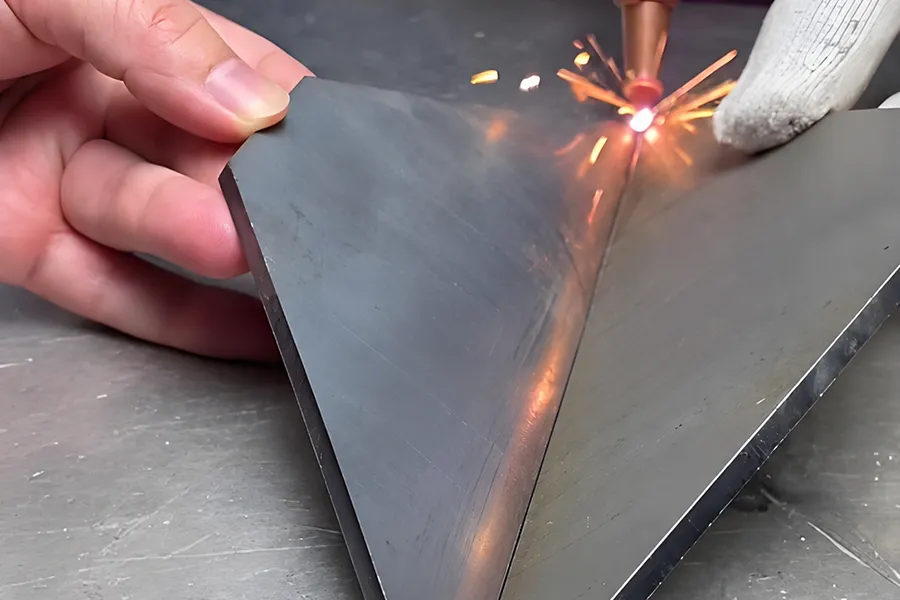
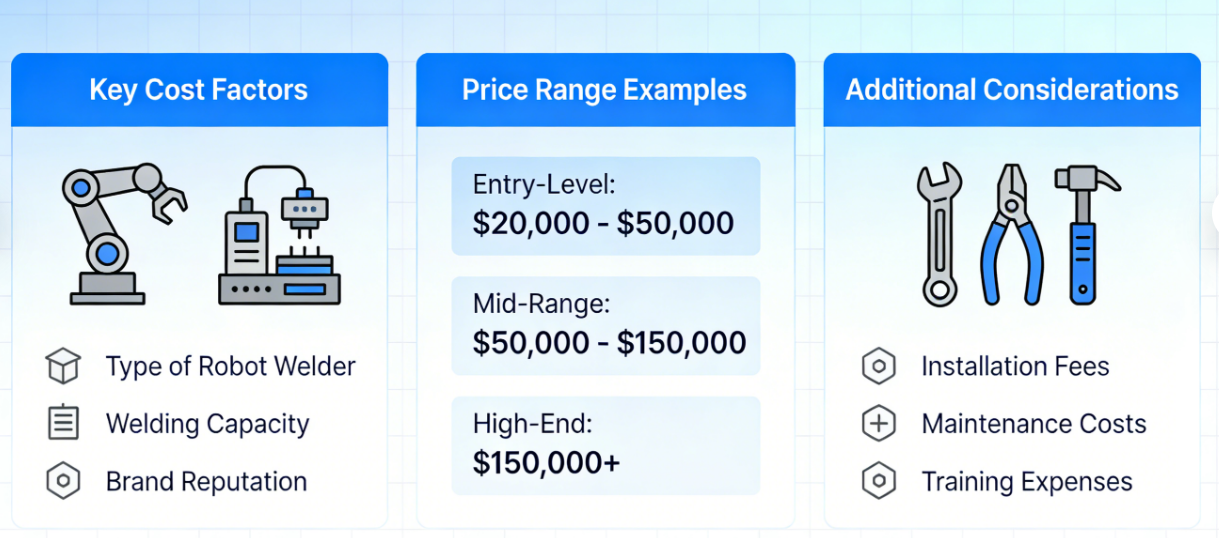
The specific type of robot welder for sale—whether it’s designed for arc welding (MIG/MAG, TIG), spot welding, or laser welding—is a primary price driver. For instance, a standard arc welding robot for sale is often the most accessible entry point, while a high-speed laser welding robot commands a premium due to its advanced technology and precision.
1.2 Payload and Work Envelope
The robot’s payload (the weight it can carry, including the welding torch) and its work envelope (the space it can reach) directly impact its cost. A heavy-duty robot welder for sale capable of handling large parts will be priced higher than a compact model designed for smaller, lighter workpieces. Defining your application’s physical requirements is crucial for finding a correctly sized and priced system.
1.3 Brand, Quality, and Support
The manufacturer’s reputation plays a significant role. Established brands offering proven reliability, comprehensive training, and strong after-sales support typically list their robot welder for sale at a higher price point. While lesser-known brands might offer a cheaper used robot welder for sale, potential buyers must carefully weigh the risks regarding long-term support and part availability.
1.4 System Configuration and Integration
The base price of the industrial robot welder for sale is just the beginning. The total cost includes essential peripherals like the welding power source, torch, wire feeder, positioner (turn table), and safety fencing. Furthermore, costs for system integration—programming, installation, and process optimization—must be factored in. A complete, ready-to-weld robotic cell for sale will reflect this full package.
2. Market Segments and Price Ranges for Robot Welders
2.1 Entry-Level and Used Systems
For small workshops or those new to automation, an affordable robot welder for sale or a used robot welder for sale can be an excellent starting point. These systems, often with smaller payloads and standard features, can be found in the range of $25,000 to $70,000. A used robotic welder for sale offers lower upfront cost but requires thorough inspection for wear and software compatibility.
2.2 Mid-Range Production Systems
This segment represents the most common industrial robot welder for sale, designed for continuous production in small to medium enterprises. Offering robust performance, better reach, and features like basic seam tracking, these systems typically range from $70,000 to $150,000. This is a popular category for companies seeking a reliable automated welding machine for sale.
2.3 High-Performance and Custom Solutions
For demanding applications in aerospace, automotive, or heavy fabrication, a high-precision robot welder for sale is required. These systems feature advanced controllers, sophisticated sensing (like 3D vision), and are integrated with complex multi-axis positioners. Prices for these top-tier robotic welding solutions for sale start above $150,000 and can extend well into the hundreds of thousands.
3. Evaluating the ROI of Your Robot Welder Purchase
While researching a robot welder for sale, it’s vital to look beyond the sticker price. The return on investment (ROI) comes from dramatic gains in consistency and output. A single robotic system can operate across multiple shifts, drastically reducing labor costs per part and minimizing rework from welding defects. The key is to calculate your potential savings in labor, material waste, and quality improvements against the total cost of the robotic welding system for sale.
4. Smart Purchasing Tips for Your Robot Welder
-
Audit Your Needs First: Clearly define the parts, materials, weld types, and required output before you start looking at a robot welder for sale. This prevents overbuying or choosing an underpowered model.
-
Prioritize Total Cost & Support: Choose a supplier that offers strong technical support and training. The long-term value of a reliable partner often outweighs a marginally lower initial price on the robot welder for sale.
-
Request a Welding Demo: Any reputable seller should offer a production sample or cell demonstration. Witnessing the robot welder for sale process your specific part is the best proof of its capability.
-
Consider Future-Proofing: Opt for a flexible system that can be reprogrammed for new parts or upgraded with new tools. This adaptability protects your investment as your business grows.
Finding the ideal robot welder for sale requires careful analysis of your technical needs and financial goals. By understanding the factors that influence cost and focusing on the total value—including performance, reliability, and supplier support—you can select a robotic welding solution that delivers lasting productivity gains and a strong competitive edge.