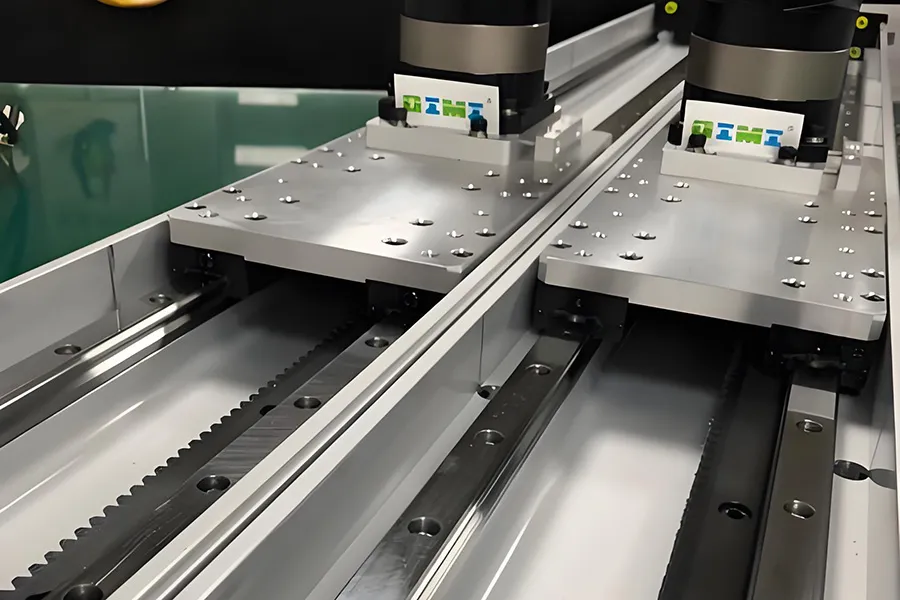
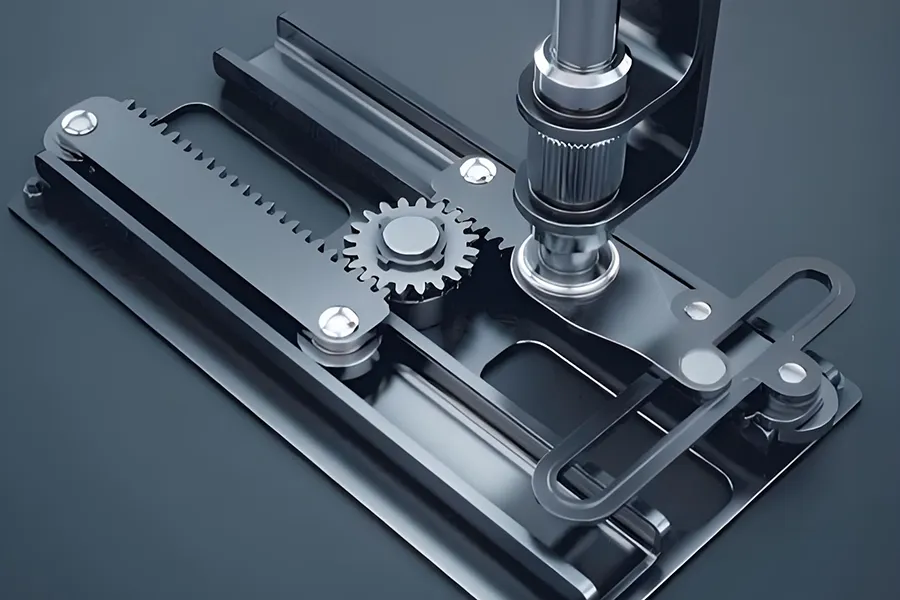
In laser cutting equipment, the transmission system directly determines cutting accuracy, operating speed, stability, and the long-term reliability of the entire machine. High-precision gear rack drives, as the mainstream transmission solution for large-format, long-stroke laser cutting machines, have become a core component that equipment manufacturers (OEMs), system integrators, and end users focus on during the selection process.
This article will systematically analyze how to select a suitable high-precision rack and pinion drive for a laser cutting machine from the perspective of combining technical specifications and commercial value.
1. Why do laser cutting machines commonly use precision gear rack drives?
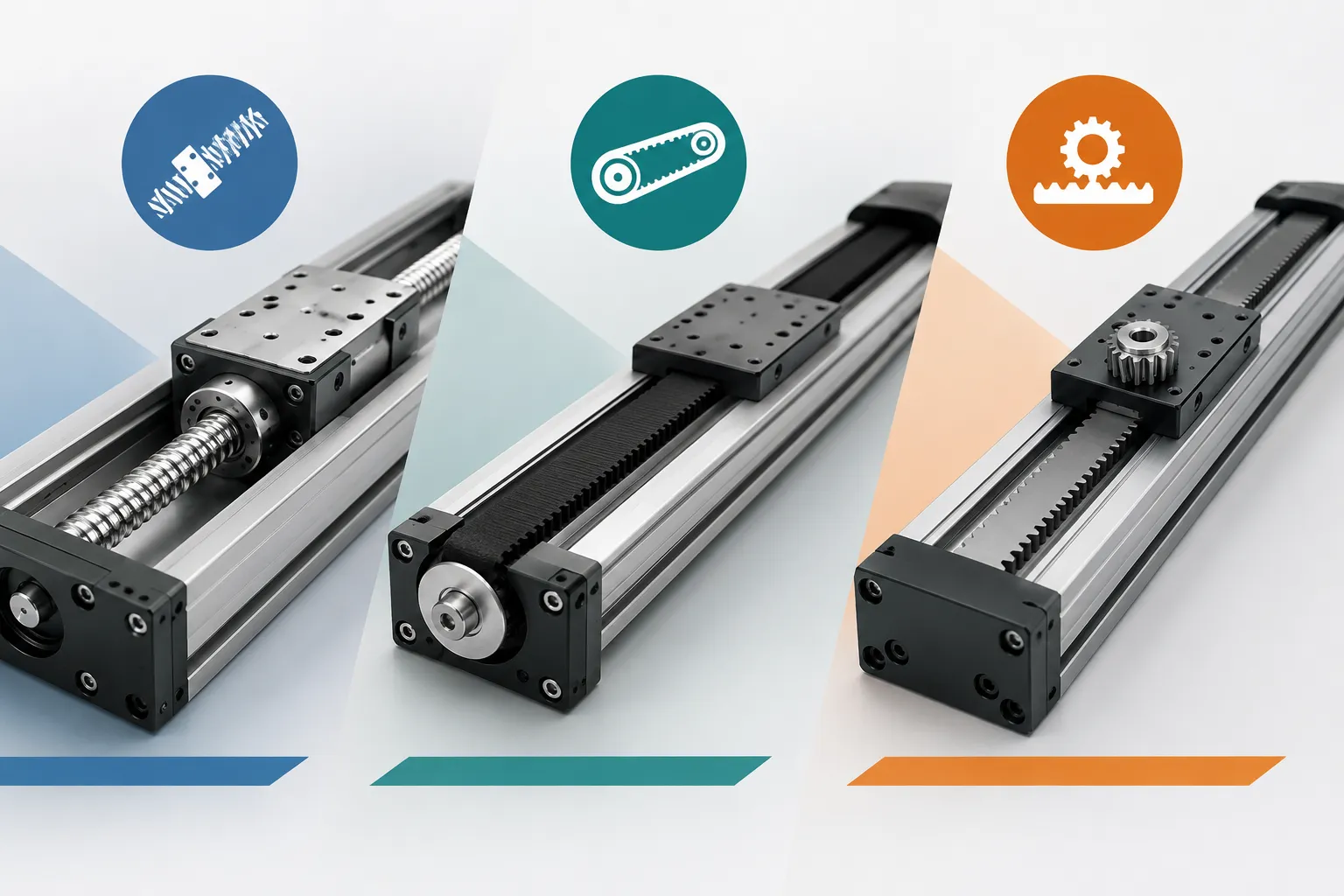
In laser cutting equipment, especially medium and ultra-large format models, rack and pinion drives have significant advantages over ball screws:
1.1 Long Stroke with No Significant Cumulative Limitations
Racks can achieve arbitrary stroke extensions through high-precision splicing, making them more suitable for cutting platforms of 3 meters, 6 meters, or even 12 meters and above.
1.2 Strong High-Speed Operation Capability
Rack and pinion drives offer better stability at high speeds, suitable for the rapid idle stroke and high-speed cutting requirements of high-power laser cutting machines.
1.3 High Load Capacity and Rigidity
For gantry structures, racks and pinions can more easily handle the weight of the crossbeams and dynamic loads.
2. Direct Impact of High-Precision Gear Racks on Laser Cutting Performance
In laser cutting applications, gear rack precision is not merely a matter of “good-looking parameters,” but directly translates into equipment performance:
- Cutting dimensional accuracy and repeatability;
- Vibration and noise levels at high speeds;
- Edge quality of complex contour cuts;
- Precision retention capability after long-term use.
Low-precision gear racks may be “usable” in the short term, but after long-term high-frequency operation, they often lead to:
- Cutting dimensional drift;
- Increased meshing noise;
- Increased equipment repair rate;
- Customer complaints and damage to brand reputation.
3. Key Technical Indicators for Selecting High-Precision Gear Racks
3.1 Accuracy Grade
Common accuracy grades typically refer to DIN or ISO standards, such as DIN 6, DIN 5, etc.
Recommendation:
- For mid-to-high-end laser cutting machines: Choose at least DIN 6;
- For high-end or export-oriented equipment: Prioritize DIN 5.
Higher accuracy grades mean:
- More stable cutting quality;
- Easier to pass acceptance standards in high-end markets or overseas customers.
3.2 Module Selection
The module determines the load-bearing capacity and transmission rigidity of the gear rack.
- Small module: High precision, stable operation, suitable for thin plates and high-speed cutting.
- Large module: Strong load-bearing capacity, good impact resistance, suitable for high-power thick plate cutting.
Appropriate module matching can improve the market applicability of the equipment without significantly increasing costs, avoiding “over-configuration” or “underperformance”.
3.3 Tooth Machining Methods: Grinding vs. Milling
- Grinded racks
High precision, good consistency, suitable for mid-to-high-end laser cutting machines.
- Milled racks
Low cost, suitable for entry-level or price-sensitive markets.
- Recommendation
Adopt differentiated product combinations for different market positioning, rather than a “one-size-fits-all” approach.
4. The Importance of Precision Gear Rack Selection from a Market Competition Perspective
In the increasingly competitive laser cutting equipment market, gear racks are no longer “hidden components,” but rather:
- A key technical selling point that sales personnel can clearly convey;
- A core configuration that overseas customers focus on;
- An important indicator that differentiates low-end from high-end products.
More and more equipment manufacturers are explicitly highlighting in their advertising:
- Gear rack precision grade;
- Transmission system configuration options;
- Long-term precision and stability advantages;
- This itself reflects the enhanced commercial value of gear racks.
Summary
Selecting a high-precision gear rack for a laser cutting machine is essentially a combination of technical and commercial decisions. It not only relates to whether the equipment “cuts accurately,” but also to whether the product “sells well, lasts a long time, and has a stable reputation.”