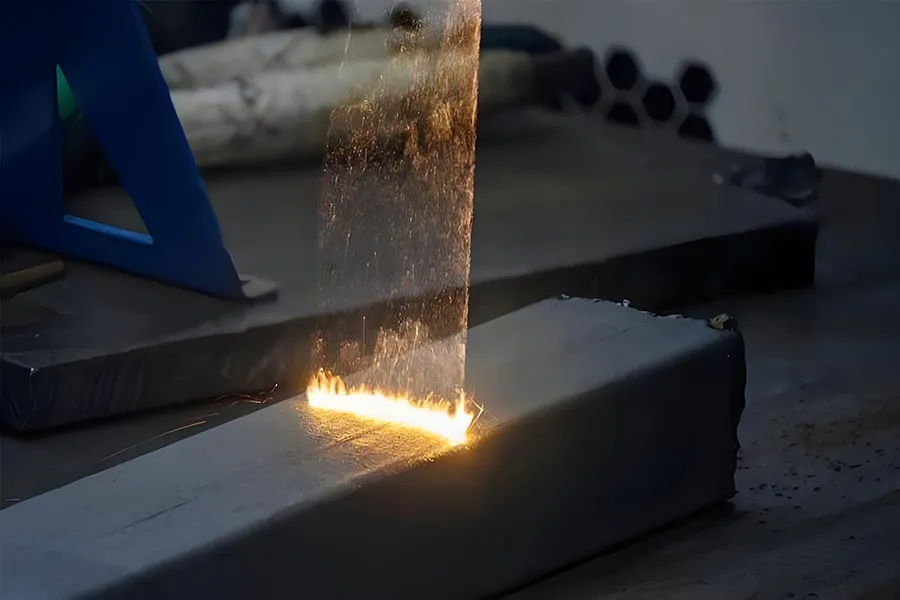
Historical artifacts typically depict life in the past. Experts study these artifacts to gain new historical insights. Typical examples include fossils, wartime supplies, animal bones, and tools once used by royalty. These artifacts are sometimes embedded in hard soil or rock formations. Separating them from their original matrix is an extremely difficult and time-consuming process. This work must be executed with the utmost care to prevent any part of the artifact from being chipped or damaged. In such scenarios, laser cleaning methods play a vital role.
Laser cleaning machines utilize high-energy laser beams during operation. They can effectively remove rust, dirt, or old paint without making physical contact with the underlying material. Furthermore, this method is relatively safe for the substrate and helps preserve fragile items. There are two main types of laser cleaning machines: continuous-wave laser cleaners and pulsed laser cleaners. In the context of artifact restoration, the pulsed laser cleaning machine is the safest and most effective device available.
This article will discuss the importance of using laser cleaning machines to clean historical artifacts, and explain why pulsed laser cleaners are particularly well-suited for this task.
1. Overview of Historical Artifact Cleaning and Restoration
Cleaning and restoring historical artifacts is crucial for preserving our cultural heritage. Over time, these artifacts inevitably become soiled or damaged. Weather conditions, environmental factors, or the sheer passage of time can all contribute to the wear and tear of artifacts. Artifacts encompass a wide range of items, including common tools, coins, paintings, sculptures, and various other objects. It is essential to clean these items to protect them and ensure their safe transmission to future generations.
Cleaning artifacts is a highly meticulous process. As you may be aware, there are numerous methods for cleaning these historical objects. Traditional cleaning methods involve the use of brushes, chemical agents, and water. Additionally, mechanical tools are frequently employed. However, traditional methods carry significant risks, as they can easily lead to damage or material degradation. Consequently, these methods are unsafe for use on sensitive or fragile surfaces. Experts should therefore opt for modern technologies to address this challenge.
Laser cleaning machines offer an effective solution for the proper cleaning of historical artifacts. These machines have gained widespread popularity due to their high precision and gentle cleaning action. They can be utilized to clean a diverse array of artifacts. Restoration—which goes beyond mere cleaning—is an even more critical aspect of the process; it involves repairing broken components and reinforcing fragile materials. The primary objective is to ensure that the artifact’s quality is restored to its original excellence. Subsequently, it is essential to maintain a controlled environment that protects the artifact from further deterioration.
Museums, laboratories, and historical sites typically employ professional conservators to oversee these preservation efforts. Their specialized expertise enables them to accurately identify the materials comprising the artifacts and determine the most appropriate methods for their proper care and maintenance. All in all, preserving these items means preserving history. It enables people to learn from the past.
2. Why Laser Cleaning Is the Ideal Choice for Restoring Historical Artifacts
Among the many applications of laser cleaning machines, artifact restoration is one of the most popular. There are numerous reasons why laser cleaning stands out as the ideal choice for restoring historical artifacts.
First, laser cleaning is a non-contact cleaning process. You do not need to physically touch the object. A highly focused laser beam targets specific areas, stripping away contaminants from the surface. If necessary, the process can be repeated multiple times to thoroughly clean the object. Traditional chemical or mechanical cleaning methods often leave behind scratches.
Second, laser cleaning is a much faster method. Traditional cleaning is time-consuming and labor-intensive, often requiring a significant amount of manual effort. While traditional cleaning methods might take a day, a week, or even a month to complete, laser cleaning typically requires only a few hours—or slightly longer—per day.
Third, laser cleaning machines offer the highest level of precision. Mechanical cleaning is prone to errors in precision, sometimes damaging fragile edges or causing scratches. Laser cleaning presents a safer alternative; it removes residues while leaving even the most delicate parts of the object intact. Even surrounding components remain safe and undamaged during the cleaning process. In fact, this method is essential for delicate items such as coins, antique paintings, and statues.
Fourth, laser cleaning machines do not utilize harmful substances or liquids to clean artifacts. This advantage makes it an eco-friendly process that is safer for both the operator and the artifacts themselves. Another benefit is that no residue is left behind after cleaning. This technology is non-abrasive, ensuring that artifacts are neither scratched nor worn down during the process. It is even capable of cleaning hard-to-reach areas within small, intricate artifacts.
3. Why Choose a Pulsed Laser Cleaner?
Pulsed laser cleaning machines are the optimal choice for artifact restoration. You might wonder why continuous-wave lasers are not used for this task. Continuous-wave lasers typically emit a constant, uninterrupted laser beam. Under these conditions, there is a high probability of generating excessive heat. Consequently, you risk damaging the artifact or leaving behind grooves—outcomes that are entirely unacceptable.
In contrast, pulsed laser cleaning machines emit short bursts—or pulses—of laser light rather than a continuous beam. This approach maximizes material safety. The use of short pulses significantly reduces the likelihood of rapid heat accumulation. As a result, you can ensure a safer cleaning process while preserving the pristine, original condition of the object being restored.
Pulsed lasers offer the flexibility to adjust both the wavelength and the flux (the amount of energy delivered to a specific area). This means that operators can select the appropriate settings based on the specific materials involved. For instance, metals, coins, stones, wood, and other materials each require different power levels. The same applies to murals and sculptures.
Summary
Pulse laser cleaning machines also help reduce thermal stress, thereby minimizing the likelihood of cracking, warping, or discoloration. Consequently, this machine is ideally suited for such restoration tasks.